

.png)
The latest edition in the ‘Meet the expert’ series: Jimmy Chang, Customer Education Manager at TRG Screen.
Jimmy Chang isn’t your typical software trainer. He’s equal parts analyst, storyteller and educator – with a mindset shaped by engineering, a career built in trading and market data technology and a lifelong fascination with food.
As TRG Screen’s first-ever lead for customer education, Jimmy’s role is all about making learning stick. His mission? To help users truly understand the TRG Screen technologies they rely on, not just click through them. That means smarter onboarding, better adoption and a more consistent customer experience – all built on insight, empathy and, sometimes, the right analogy.
We caught up with Jimmy to talk about translating complexity, why mindset matters and the parallels between great training and great food.
Let’s start with your role – what do you do?
Customer education is a new role at TRG Screen, but in many ways, it’s the culmination of everything I’ve done over the past 20 years here. I’ve led customer success teams, overseen implementations and worked across our technologies – and the common thread through it all has been helping customers get the most out of our products after they go live.
Now, I get to focus entirely on that. It's more than onboarding. It’s about giving clients the confidence and context to get more from our platform as they use it day to day to help them do their job.
That starts early – I work closely with our implementation team from the moment a client comes onboard, so we can plan a training experience that’s relevant to their role, region and working reality.
And it doesn’t stop after go-live. I stay involved – delivering follow-up training, answering questions, guiding teams through new features or releases, and making sure clients continue to get real value from the tools they’ve invested in. Over time, you start to build relationships. You understand their business environment, what they’re trying to achieve and what’s getting in the way. That’s when the training becomes more nuanced, and more impactful.
I work across all of TRG Screen’s products, so for many clients I become a familiar point of contact across solutions. That helps us deliver a more joined-up experience, where users feel fully supported, not just trained.
What do you think great training unlocks for customers?
For me, it’s about opening up possibilities. Market data is often seen as complex, niche – even intimidating. But when you give market data teams the right context and tools to manage their market data program, that starts to change. They stop just following robotic steps and start understanding what’s actually possible and become truly proficient with those tools.
I was raised to track my spending, question what I was paying for and manage my money like it mattered. Those are life skills, but in this space, it’s often not that simple. But once a business deploys our technology, and we start training their teams on how to use it to its fullest potential, you can see a mindset shift. Suddenly, they’re not just learning a system, they’re managing something that can help them think differently about how their business is buying and using market and reference data. They have a tool that can deliver real business value.
What’s your approach to making training stick?
Relatability. You have to meet people where they are. If someone’s new to market data, explaining contract hierarchies isn’t going to mean much. But compare it to a household budget or managing your grocery list, and suddenly it clicks.
I try to link every concept to something familiar, whether that’s Netflix subscriptions or monthly phone bills. People learn faster when it feels like they already understand it. You build from there.
But it’s never one-size-fits-all. Every organization has a mix of roles, responsibilities and experience levels. A data analyst needs something different from a procurement lead or a regional admin. So, I always tailor the training to the person’s role, the job function and the level of experience – and that varies by geography, too. What lands in London might not resonate in Singapore or New York.
You have to listen, adjust and never assume. Because if the training doesn’t connect, it doesn’t land.
And how do you approach training as an ongoing process?
The reality is that market data teams change. Turnover in this space can be higher than in other areas, and if you want your tech investment to keep delivering, your people need to stay equipped. That’s why I focus just as much on continuity reinforcement as I do onboarding.
It’s about building capability on an ongoing basis, not just ticking a box once.
How do you see training evolving in this space?
AI is already reshaping how we deliver education – from tailoring content to individual roles to cutting down the time it takes to prepare and deliver training. Soon, I think we’ll see systems that adapt to how someone learns in real time – not just what they need to know, but how best to teach it.
Training shouldn’t just teach you how to use a software system. It should give you confidence to ask better questions, challenge old ways of working, and see the value you’re actually sitting on. That’s what changes the game.
What does success look like for you?
When someone finishes a session and says, “That makes my job easier.” That’s it. Training should feel useful. It should add something. If a client walks away feeling better equipped, more capable, more empowered – I’ve done my job.
And when you get that right once, you multiply it – across market data teams, regions, even entire organizations. That’s where the real impact lies: building knowledge that scales and spreads.
What might people be surprised to learn about you?
I’m more of an introvert than people think. I spend my workday talking, solving, explaining – but I recharge in quieter spaces. People often assume I’m naturally outgoing, but I find my balance in calm, reflective moments.
What do you like to do outside of work?
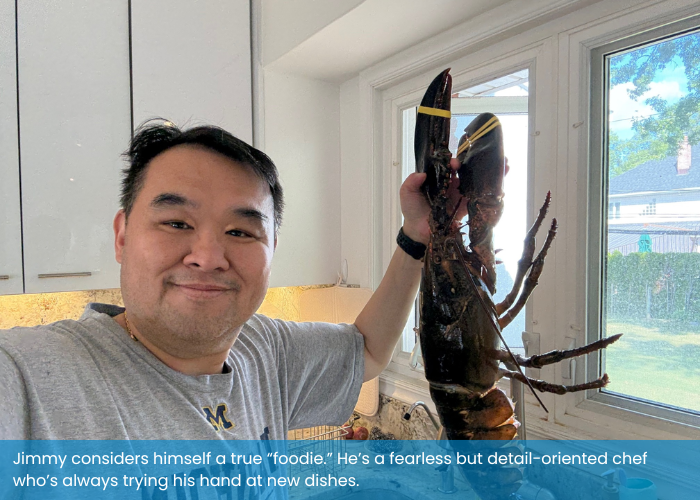
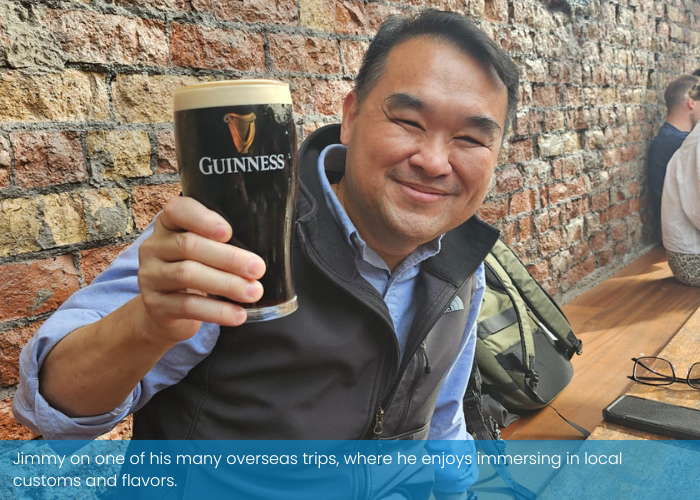
I love to travel, exploring cities, discovering new places and soaking up the local atmosphere. And for me, travel always goes hand-in-hand with food.
Cooking is something I really enjoy. When I travel, I’m always looking at how food connects to the culture, because I really believe that food defines the people. The ingredients, the process, the way dishes are built – it all tells you something about the place and the mindset.
French cuisine stands out for me. People are always surprised when I say that, but it’s because of the focus and discipline behind it. The foundations, the techniques, the way flavors are layered – there’s something thoughtful and intentional about it. A lot of other cuisines borrow from that discipline, and I love that.
It probably started during my early travels, right after college. I did the classic backpacking trip through Europe, and I kept finding myself drawn back to France. I ended that trip in Paris, and every time I go back, I still walk by the same hostel I stayed in. There’s something grounding about it. Travel gives me perspective, and food helps me connect with it.
Stay tuned for more expert insights in our Meet the Expert series, where we showcase the incredible talent behind TRG Screen and their contributions to the financial services industry.