

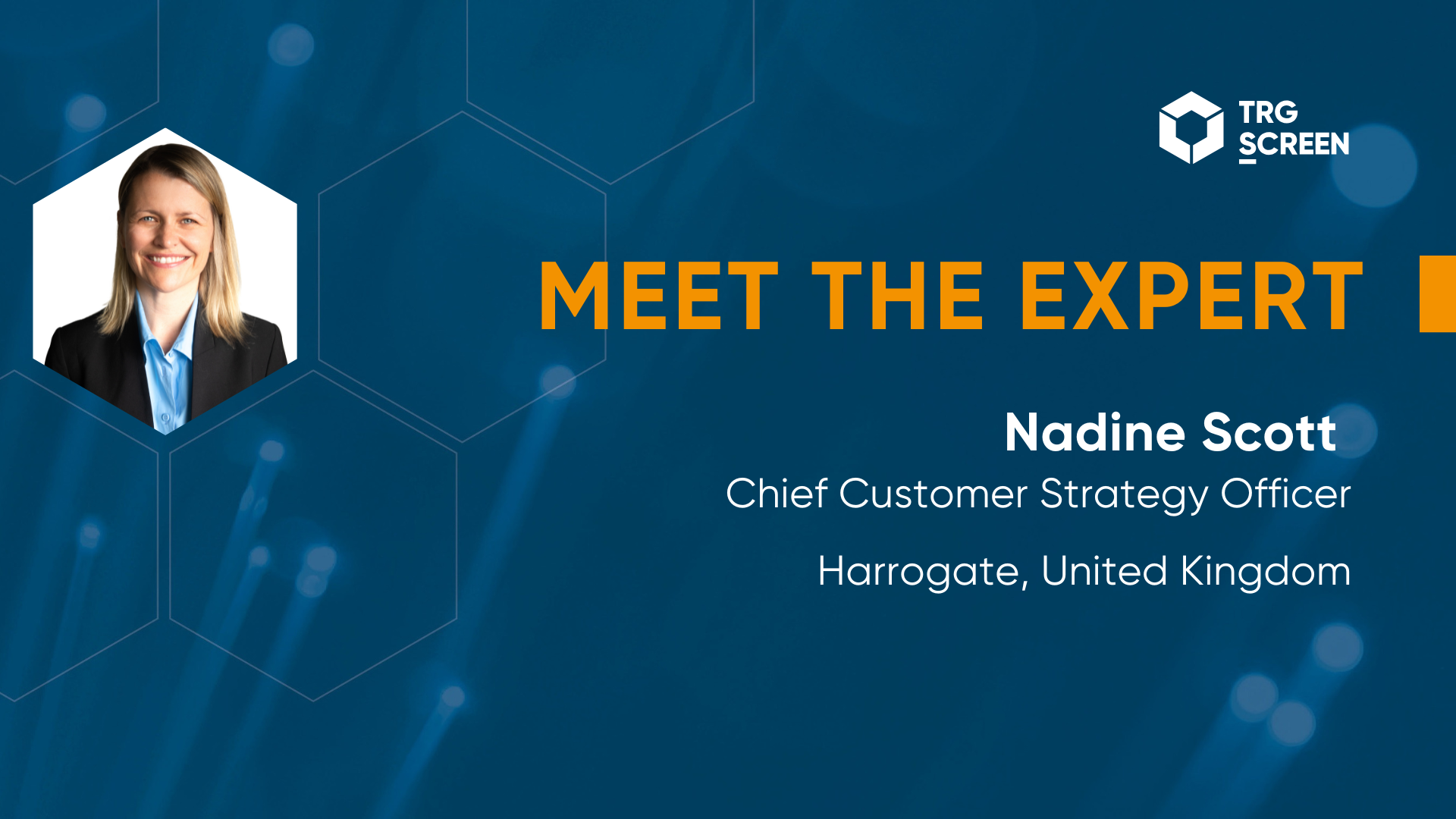
The latest episode in the ‘Meet the expert’ series: Nadine Scott, Chief Customer Strategy Officer, TRG Screen
From practitioner to strategist, Nadine Scott has spent her career working in and around market data operations. Now, as Chief Customer Strategy Officer at TRG Screen, she sees a consistent challenge: many firms are still operating below their potential when it comes to managing market data.
In this edition of Meet the Expert, Nadine shares her perspective on what’s driving that gap and how firms can start to close it; from operating model design through to AI-enabled ways of working.
Can you tell us about your role and what it involves?
It’s a new role, and it’s been created to reflect how the market is evolving.
A big part of my focus is establishing TRG Screen Advisory Services. It’s about helping clients design and optimize their market data operating models to deliver better commercial outcomes.
What we are finding is there is clear demand for advisory that helps firms elevate their commercial operations through a holistic design incorporating systems, processes, data and help teams clients navigate the shift to AI-enabled operations is an integral part of this. Often, that transition isn’t just about deploying a new technology, it can require guidance to ensure it’s aligned to what the organization is trying to achieve.
Another key area of my role is to oversee our partnership strategy – we are lucky enough to operate in a wider ecosystem of vendors where opportunities to collaborate are in abundance to collectively deliver value to customers. I’m also supporting our acquisition strategy, which continues to be an important part of how we evolve to meet the needs of an ever-changing market.
What are you seeing across the market in terms of maturity and where are the biggest gaps?
There's a wide spectrum, but the reality is that a large part of the market is still operating at a very basic level.
At one end, some organizations have highly experienced teams. They've been through multiple cycles of cost optimization and process improvement, and they have strong control over their spend.
But those teams are under pressure and we're seeing them reduce in size over time. They're being asked to do more with less; managing increasing complexity, while also being expected to adopt automation and AI. There's just less capacity to step back and redesign how things could work.
At the other end, firms are doing what they need to do operationally. Fee-liable data is consumed, invoices are paid, and the function supports the business. But beyond that, there often isn't a clear view of how effectively that spend is being managed.
Our aim is to help clients move along a curve of operational maturity, ultimately towards a state of complete cost control and optimization. But getting there requires a structured approach from understanding where they are today, to defining a future state with recommendations and deployments that enhance and maximize their capabilities.
What outcomes can clients expect from an advisory engagement?
Introducing our software improves visibility; you can see what you're spending and where opportunities exist. But visibility is just the starting point.
To operate optimally, firms need to understand their commercial position across three dimensions; how much they spend and on what, their utilization and their compliance position. Advisory engagements often focus on the processes which develop a solid data foundation across these dimensions. Workflows are then designed to orchestrate these data points to understand relationships between contracts, vendors and consumption in enough detail to create leverage and cost-control muscle.
That might mean achieving stronger renewal positions, offering the business more cost-effective alternatives or responding to demand in a way that balances commercial and compliance considerations.
The real value of commercial maturity is that intelligence is applied consistently, across all spend rather than ad hoc wins.
How would you describe your approach to consultancy?
We start with outcomes, working back systematically from "what does 'good' look like"?
From there, we assess where the client is today and identify what's helping or holding them back. The goal is to close the gap between current and future state with approaches that drive commercial maturity but also efficiency so that customers can deploy internal teams to knowledge-based work.
It's a holistic approach. We're not just looking at the software deployed, we're looking at processes, team structures, data quality, integrations and dependencies. It's about designing operations that are aligned to the outcomes the client actually wants to achieve.
What do you see as the biggest impact of your role on clients and the industry?
Market data is a specialist area. Many firms turn to large consultancies for support, but they don't always have deep, hands-on expertise in market data itself. It's often one part of a much broader transformation agenda.
What we're providing is something much more focused.
We're one of the few players in the market that combines specialist market data expertise with a platform and a complete expert-led solution behind it – so we're not just advising, we're enabling execution.
For clients, that creates a much clearer path. If they know they need to transform but aren't sure how, there's now a dedicated, specialist option that can take them from strategy through to delivery.
What excites you most about the future of market data management?
AI – without question. It fundamentally changes what makes someone effective in this space.
When I think back to my time as a practitioner, what made you good at your job came down to two things: access to the right data points and knowing how to bring them together to drive an outcome.
That could be negotiating a contract, responding to a business request or finding a more cost-effective way to meet a need. It was about having the information and knowing how to use it. That's what differentiated strong teams.
AI changes that dynamic. It makes those data points far more accessible, and it makes the orchestration of them easier, faster and far more repeatable than it's ever been before.
So, it's not just about efficiency. It's about taking something that was previously dependent on individual expertise and making it scalable.
That has huge implications for how market data teams operate, and the level of value they can deliver.
What advice would you give to firms trying to manage market data more effectively?
Focus on your data. What are your data points telling you? And what leverage do they give you?
Market data is a difficult cost base to manage. Vendors have strong pricing power, so traditional negotiation levers are limited. But if you truly understand your consumption, your alternatives and how those evolve over time, you create opportunities to manage that spend more effectively.
That level of insight is what enables more effective cost control and the ability to apply it consistently.
How would you describe your leadership philosophy?
You can't restrict your thinking to what you already know. If you do, you'll just optimize the current state instead of improving it. For me, it comes down to professional curiosity and being willing to challenge how things are done and explore what's possible.
There's a strong analytical element to this work but being analytical isn't just about understanding where you are today. It's about being able to visualize where you could be and how to get there.
AI is opening up new possibilities in that respect. Solutions that were once rigid or complex are becoming far more flexible.
That requires a shift in mindset, but it's also where the opportunity lies.
How do you spend time outside of work?
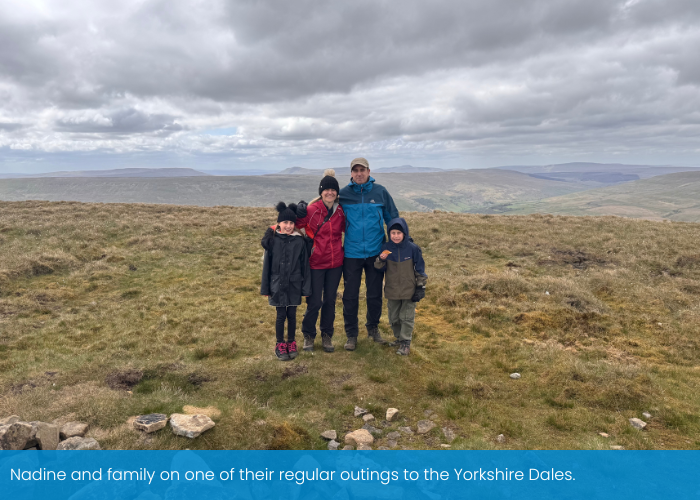
I'm very outdoorsy. I love hiking, camping and swimming, especially in cold water. Those kinds of activities are a real reset; they give you space to step back. And that's often where the best thinking happens.
The Yorkshire Dales is my favorite place on earth, I'm out there come rain or shine, I love the drama of it.
Stay tuned for more expert insights in our Meet the Expert series, where we showcase the incredible talent behind TRG Screen and their contributions to the financial services industry.