

Market data spend hits another record 💰 as complexity grows

Spending on financial market data and news hit a new record in 2025, highlighting the value banks and other institutions place on these vital streams of information that drive their business.
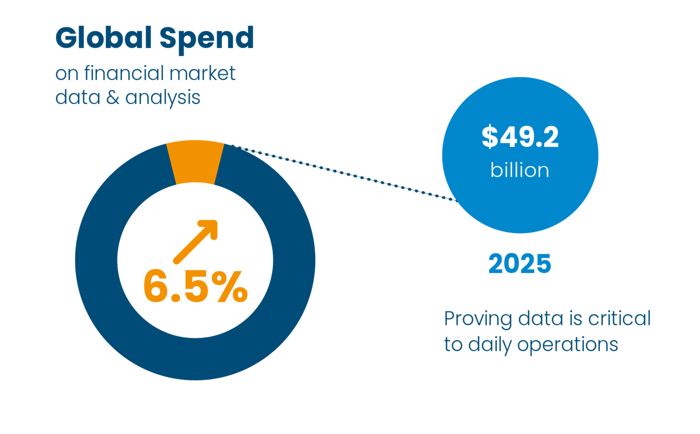
Quick answer: global spend on financial market data and analysis reached $49.2 billion in 2025, up 6.5% year-over-year, according to Burton-Taylor International Consulting (part of Parameta Solutions) — the industry’s tenth straight year of record spending.
“Market data remains one of the biggest costs faced by financial institutions.”
Global spend on financial market data rose by 6.5% on the previous year to $49.2 billion, with demand from automated trading, artificial intelligence and volatile markets continuing to outweigh cost pressures.
The respected annual benchmark report by Burton-Taylor International Consulting said spending has touched new highs every year for more than a decade.
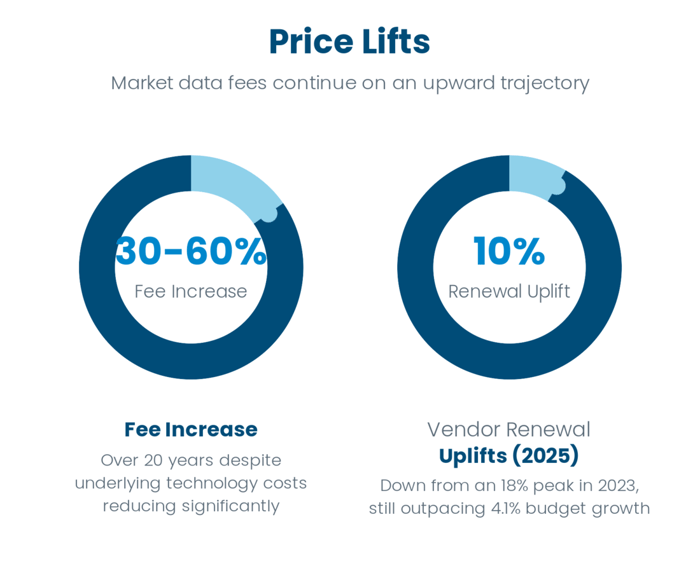
 It will come as no surprise to firms who are already having to pay more for data, that fees have risen by 30-60% over the past two decades. Renewal uplifts from major data vendors averaged 10% in 2025 — down from an 18% peak in 2023, according to Substantive Research and BCG Expand — but still outpacing the 4.1% growth in firms’ own data budgets. A contributing factor to the upward trend in spend.
Other growth factors
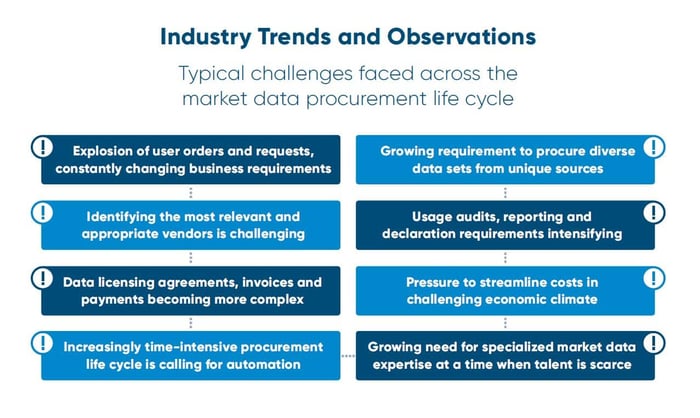
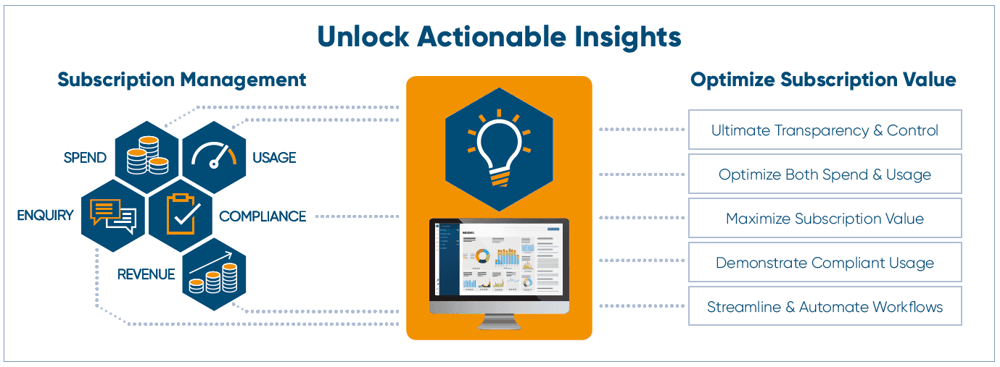
Like many other industries, market data consumers are still adapting to a fast-changing world. Market volatility, hybrid working and now the rapid adoption of AI-driven trading and analytics tools are all fueling increased data demand. Firms need more licenses and more granular datasets, raising costs and potentially making it harder to track compliance with vendor contracts.
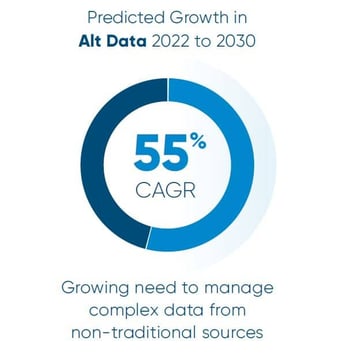
The increased demand for data has also triggered strong growth in alternative data, and it continues to expand. Grand View Research valued the global alternative data market at $16.7 billion in 2025.
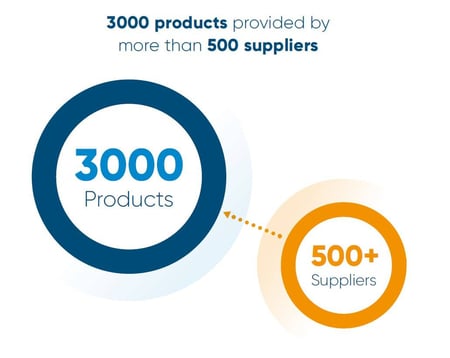
Analysts expect “alt-data” to grow at a compound annual growth rate of around 52% through 2030, when the market is projected to reach roughly $135.7 billion. This means more data sources need to be acquired and managed and typifies the relentless growth in complexity of market data.